
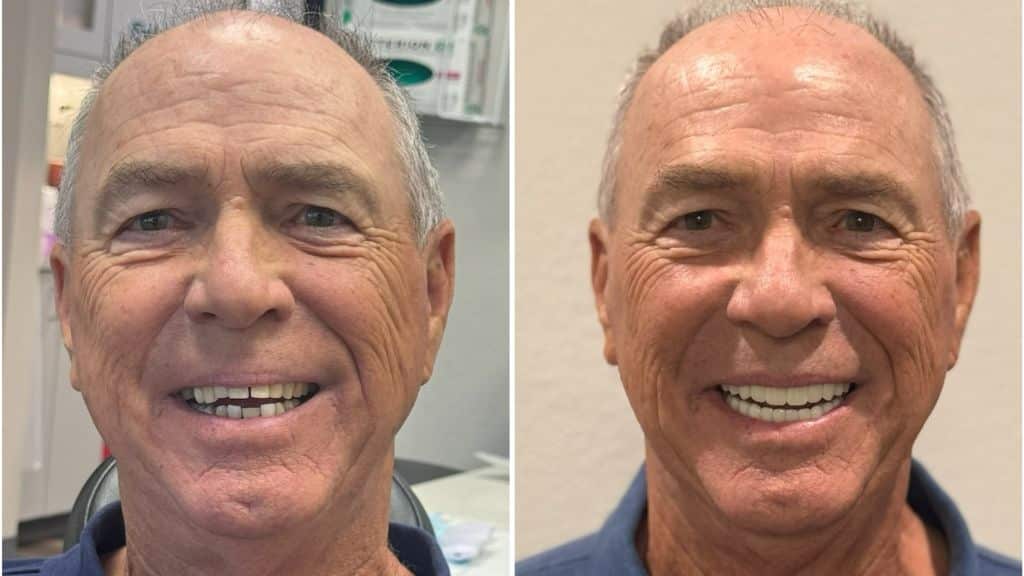
Losing several or all of your natural teeth can affect more than just your smile. It can change how you eat, speak, and even feel about your appearance day to day.
Full mouth restoration is a comprehensive approach to rebuilding a healthy, functional smile, and dental implants often serve as the foundation for this process.
Understanding how implants fit into full mouth restoration can help you feel more confident discussing your options.
In this post, we’ll walk through what full mouth restoration involves, how implants support it, and what to expect during a consultation with your dental team.
Understanding Full Mouth Restoration
Full mouth restoration refers to the process of rebuilding or replacing all of the teeth in the upper and/or lower jaw. This may be necessary due to extensive tooth loss, decay, gum disease, trauma, or wear from grinding over many years.
Unlike single tooth replacement, full mouth restoration considers the entire mouth as a system. Dentists evaluate bite alignment, jaw function, gum health, and facial structure together. The goal is to restore both how the mouth works and how it looks, creating a result that feels natural and comfortable.
This type of treatment is highly individualized. A personalized treatment plan can be discussed during a consultation, since every patient’s needs, bone structure, and oral health history are different.
Why Dental Implants Are Central to Restoration Plans
Dental implants are small titanium or zirconia posts that are placed into the jawbone, where they function similarly to natural tooth roots. Over time, the bone integrates with the implant through a process called osseointegration, creating a stable base for replacement teeth.
In full mouth restoration, implants play a foundational role because they:
Provide a Stable Foundation
Dental implants provide a fixed point of support for fixed bridges rather than relying on the gums alone for stability.
Help Preserve Jawbone Density
Implants help maintain jawbone density by stimulating the bone the way natural tooth roots once did. This may help reduce bone loss that often occurs after tooth loss.
Improve Chewing Function
Dental implants distribute chewing forces more evenly across the jaw, supporting better function for biting and chewing.
Because implants are anchored directly into the bone, they can offer a stable foundation for replacement teeth.
Implant-Supported Fixed Restorations
There are several ways implants can be used as part of a full mouth restoration plan. The right approach depends on factors like the number of remaining teeth, bone density, and the patient’s overall goals.
3 on 6 Dental Implants
The 3 on 6 is the full-arch restoration approach offered at All Out Dental. Rather than supporting a full arch with a single restoration, the 3 on 6 uses six dental implants to support three separate fixed bridges across the arch.
Patients often consider the 3 on 6 for reasons such as:
- It is a fixed restoration that stays securely in place and does not need to be removed for cleaning.
- The three-bridge design allows each section of the restoration to be addressed individually if maintenance is ever needed.
- The approach is designed to work with the natural gum line.
- Many patients find it functions and feels close to natural teeth for everyday speaking and eating.
As with any dental implants treatment, the 3 on 6 may not be suitable for everyone. Candidacy depends on factors such as bone density and gum health, which your dental team can evaluate during a consultation.
Combination Approaches for Partial Tooth Loss
Full mouth restoration does not always mean every tooth is replaced. In some cases, implants are used to restore areas of missing teeth, while healthy natural teeth that can be preserved are kept and maintained as part of the overall treatment plan.
The Full Mouth Restoration Process with Implants
Every treatment plan is different, but full mouth restoration involving implants generally follows a series of stages.
Initial Evaluation
The process begins with a thorough oral examination, including digital scans or X-rays to assess bone structure, gum health, and the position of remaining teeth. This evaluation helps determine which restorative options may be suitable.
Treatment Planning
Based on the evaluation, a dentist develops a step-by-step plan. This may involve coordinating multiple types of treatment, such as extractions, bone grafting if needed, implant placement, and the design of final restorations.
Implant Placement
Implants are surgically placed into the jawbone. Depending on the case, a temporary restoration may be worn while the implants integrate with the bone over a period of several months.
Placing the Final Restoration
Once healing is complete, the final fixed bridge is attached to the implants. Adjustments are often made to ensure proper bite alignment and comfort.
Treatment outcomes vary depending on individual circumstances, including healing time, bone quality, and how well a patient follows post-treatment care instructions.
Benefits of Including Implants in Full Mouth Restoration
Choosing implant-supported restorations as part of a full mouth rebuild may offer several potential benefits compared to restorations that rely solely on natural teeth or gum tissue for support.
Improved Stability
Because implants are anchored in the jawbone, restorations supported by them may feel secure during everyday eating and speaking.
Support for Facial Structure
Tooth loss can sometimes lead to changes in facial appearance over time due to bone loss. Implants may help support the jawbone and, in turn, support facial contours.
Easier Maintenance
Fixed implant-supported restorations are cleaned similarly to natural teeth, with regular brushing, flossing, and professional checkups. Many patients find this routine straightforward to maintain, though individual experiences may vary.
Long-Term Oral Health Considerations
By helping to preserve jawbone density, implants may contribute to better long-term oral health outcomes as part of a broader restorative plan.
It’s important to note that implants are not the right solution for every patient. Factors such as bone density, gum health, certain medical conditions, and smoking habits can all influence candidacy. A dental professional can evaluate whether implants are appropriate as part of a restoration plan.
What to Expect During Recovery
Recovery time after implant placement varies from person to person. Some patients return to normal activities within a day or two, while the bone integration process can take several months to complete fully.
During this period, it’s common to follow a soft food diet, maintain good oral hygiene, and attend follow-up appointments so the dentist can monitor healing. Discomfort, if any, is generally manageable and tends to improve within the first week.
Because every mouth heals differently, your dental team will provide guidance specific to your treatment plan and let you know what signs to watch for during recovery.
Frequently Asked Questions
How long does full mouth restoration with implants take?
The timeline depends on the complexity of the case. Some patients may complete treatment within a few months, while others, particularly those needing bone grafting or multiple stages of healing, may take a year or longer. Your dentist can provide a more specific timeline after an evaluation.
Are dental implants the only option for full mouth restoration?
No. While implants are commonly used because of the stability they provide, full mouth restoration can also involve other approaches, depending on a patient’s oral health, bone structure, and preferences. Many treatment plans combine different approaches.
Is full mouth restoration with implants uncomfortable?
Most patients report manageable discomfort following implant placement, often similar to what is experienced after a tooth extraction. Pain management options are typically discussed with your dental team, and discomfort generally decreases within the first few days.
How do I know if I’m a candidate for implant-supported restoration?
Candidacy depends on factors such as jawbone density, gum health, and overall medical history. The best way to find out is through a comprehensive evaluation, which may include imaging to assess bone structure and a discussion of your goals and concerns.
Conclusion
Dental implants often serve as a key building block in full mouth restoration, offering a stable foundation that can support a fixed full-arch bridge. While not every patient will follow the same path, implants are frequently considered for their potential to support both function and long-term oral health.
Because every situation is different, the best way to understand your options is through a personalized consultation with a qualified dental team. At All Out Dental, our team is focused on patient comfort and evidence-based care, helping you explore the restorative options that may be right for your smile.